

RIP Mary Immaculate Convent
The year the magic died

The announcement this week that Mary Immaculate Convent, Annerley, Brisbane, would close its doors after 110 years mattered not a jot to Australia’s media.
They had much bigger stories to fly.
“Inter-generational inequality”; a Royal Commission into “hate speech”; a large house for sale on Domain; the Eurovision Song contest ... how could the closure of a tiny primary school in the Brisbane suburbs rate?
But it did rate once.
Not just with the thousands of kids educated there, but with the millions of Australians who read the book I wrote from within those high Mary Immaculate Convent walls … or who listened to it nationally on ABC radio every Sunday morning for two years back in the ’90s.
Before social media ended kids’ social life.
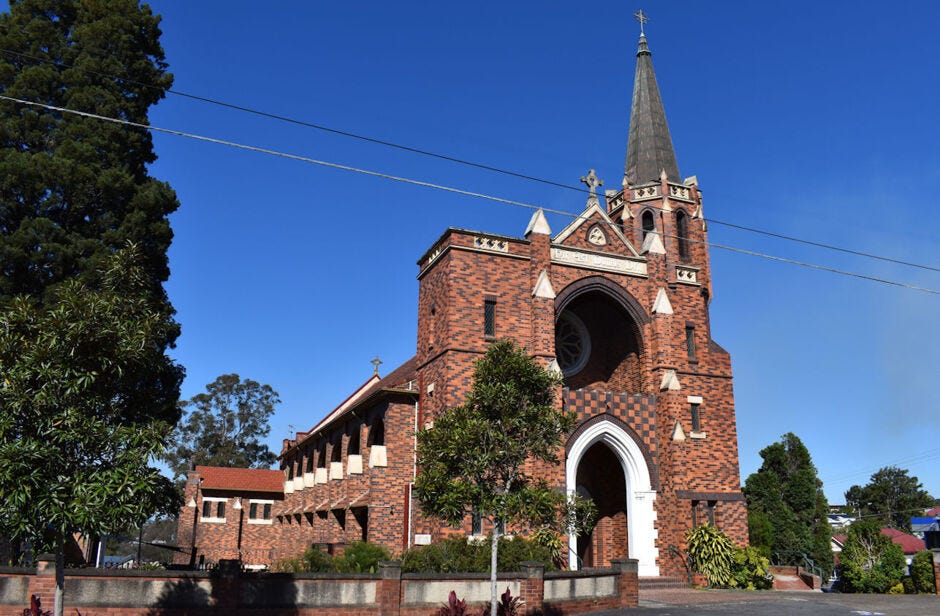
My book – Over the Top with Jim – was set in the ’40s and ’50s as, aged 4 to 13, I looked out through the Convent fence of iron bars with arrow-tops onto Ipswich Road.
At the time, I assumed these high bars were to keep the anti-Catholic State School Kids out.
I didn’t know who these State School Kids were, but I could see they greatly outnumbered us. They were like a nasty tribe that wore no uniforms or shoes and who yelled at us: “Catholics, Catholics, sit on logs eating the bellies out of frogs” or “Catholics, Catholics sit like frogs … in your Holy Water!”
Or, “Your knees are dirty from praying too much!”
Talk about your Hate Speech.
The reason I wrote that memoir was because of the huge effect Mary Immaculate had on my life … and on the lives of my friends and relatives.
This little school gave us – not just an education – but the knowledge, confidence, and ability to travel and work anywhere around the world. The Sisters of St Joseph even taught us that the worst sin was “calumny and detraction” because, once you said defamatory things about someone else you could never undo the wrong you’d done.
“It’s like climbing to the top of the bell tower of Mary Immaculate Church and loosed your comment off into the distance like an arrow,” said Sister Vincent.
Many critics were surprised and annoyed by the success of a child’s story from such an obscure Brisbane suburb on the intensely unfashionable southside.
But I think Over the Top with Jim became “the biggest-selling Australian childhood memoir ever written” [University of Queensland Press (UQP) official history] because it showed that even when you are down the bottom of the class in the middle of nowheresville, it doesn’t mean you can’t lead an interesting life.
Critics didn’t realise that I only got to publish Over the Top because of the success of my Vietnam War memoir which a few years before won a Melbourne AGE newspaper Book of the Year Award and was then published in New York (twice).
Thus, several publishers in Sydney and Melbourne asked me to write another autobiography.
When I suggested one about my childhood at Mary Immaculate Convent, to my shock they each recoiled in their own version of horror.
“No no no no no,” said one publisher, “everyone writes a book about their childhood. They’re boring and they don’t sell!”
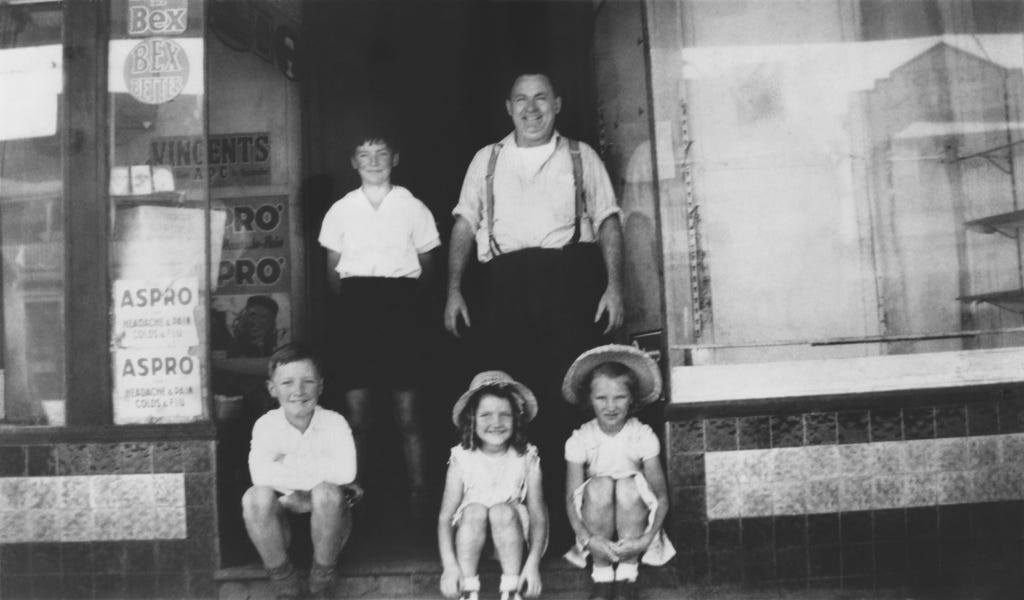
Another reacted: “Were your parents famous?” – and I said: “Well … they did own a busy cakeshop.”
Penguin in Melbourne said: “Not another bloody Catholic childhood!” And added: “If it’s set in Brisbane it’ll never get through the tick gates into Sydney and Melbourne!”
Even so, I resigned my job on The Australian after finishing writing Rupert Murdoch’s 1987 Annual Report (including writing his personal Chief Executive’s Review) and went home to our five-room timber Queenslander at 44 Adsett Street, Taringa, to write a book about my childhood.
The best idea I had, in retrospect, was to write the book from the point of view of the little boy.
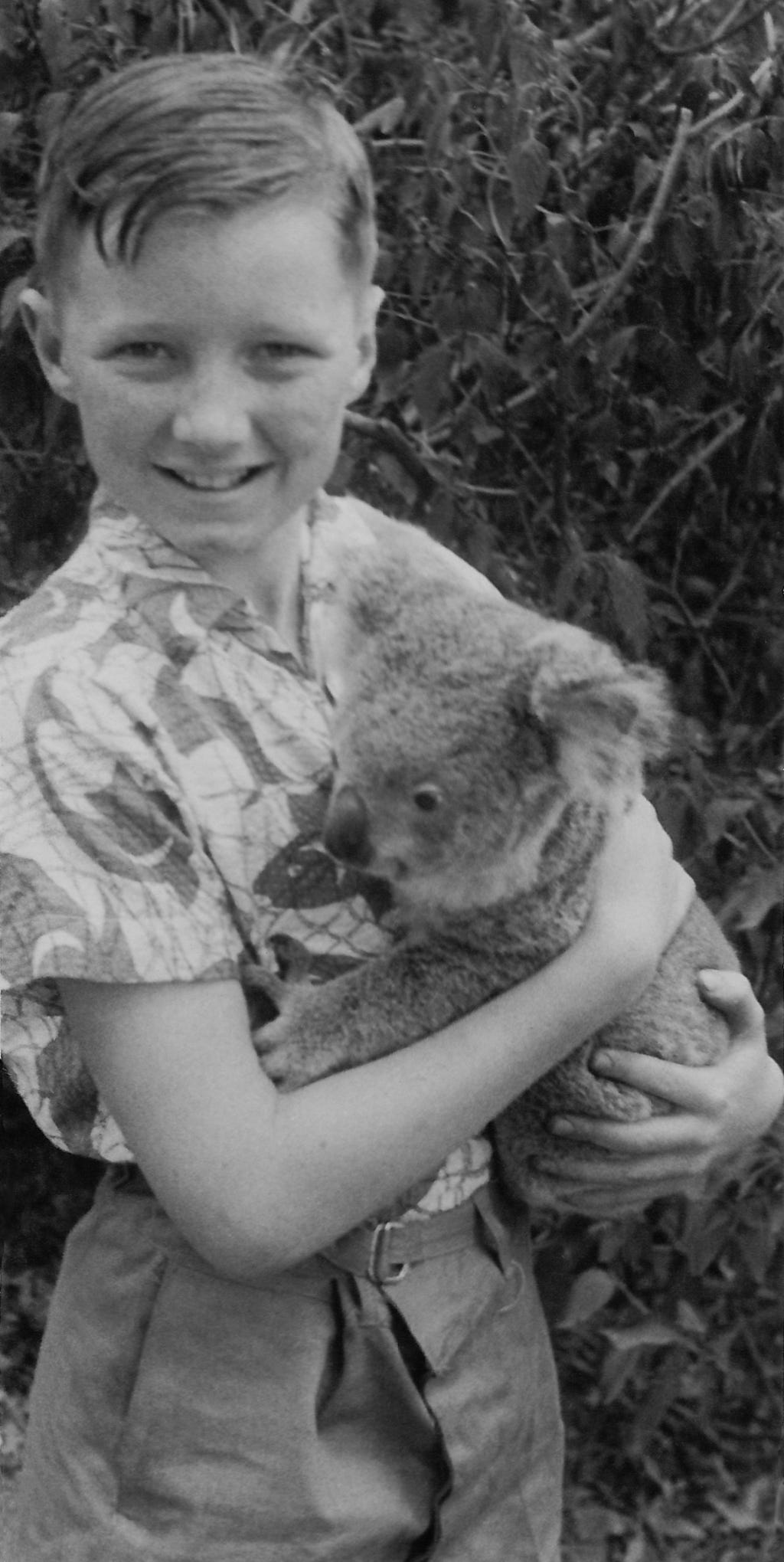
Because my previous memoir was called Vietnam: A Reporter’s War I began by writing my proposed title: “A Child’s War”. I had spent a childhood pursued by State School Kids, nuns with lawyer canes, and Brothers with thick, stitched, stained leather straps.
For nine months I sat at home and thought about how to start: since I believe if a reader doesn’t enjoy the first page then they won’t keep reading.
Frustrated, I made a list of what life was like back in the 1950s – all the things that were different from today:
Corporal punishment; statewide public exams; fighting the State School Kids; frightened of Communism; scared of the Red Peril (the Russians) and of the Yellow Peril (the Chinese); compulsory service in the school army cadets carrying my own .303 rifle from age 13.
The World War II Australian saying had not yet been forgotten: Fight. Work. or Perish.
It was the list that made it obvious where to begin.
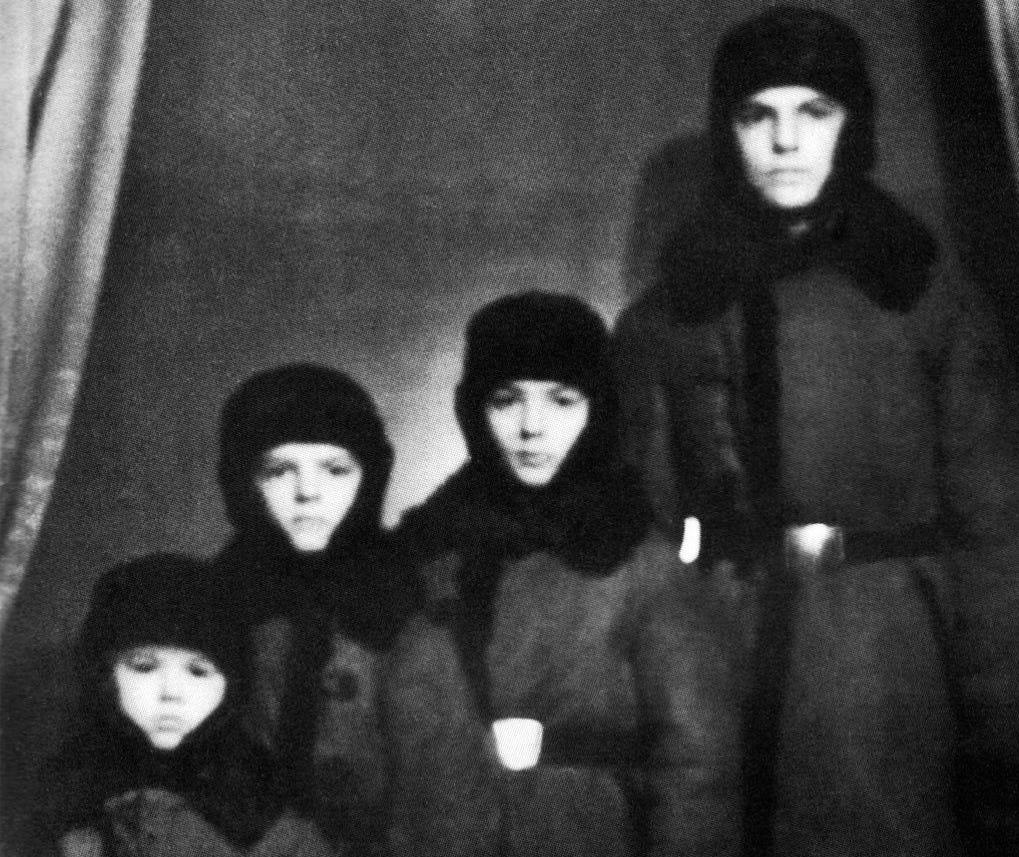
I could capture all of it by starting my book with the arrival in our class at Mary Immaculate Convent of 9-year-old Dimitri Nicolayevich Egoroff in 1951.
Because he was Russian, I stood behind him at Assembly and whispered: “You Communist Pig, Dima!” (shortening Dimitri as we always did with long first names); “You Russian Dog, Dimitri!”
To my surprise, this Russky with a wide scar down the middle of his nose turned around and said “You Australian Donkey!” and rubbed the sides of my head with his hands saying: “I rubba your ears!” “I rubba your ears!”
It was like Japanese torture and if ever an example of Red Aggression was needed this was it.
The Cold War was really starting to hot up.
Multi-culturalism had arrived in Australia – and I was resisting it!
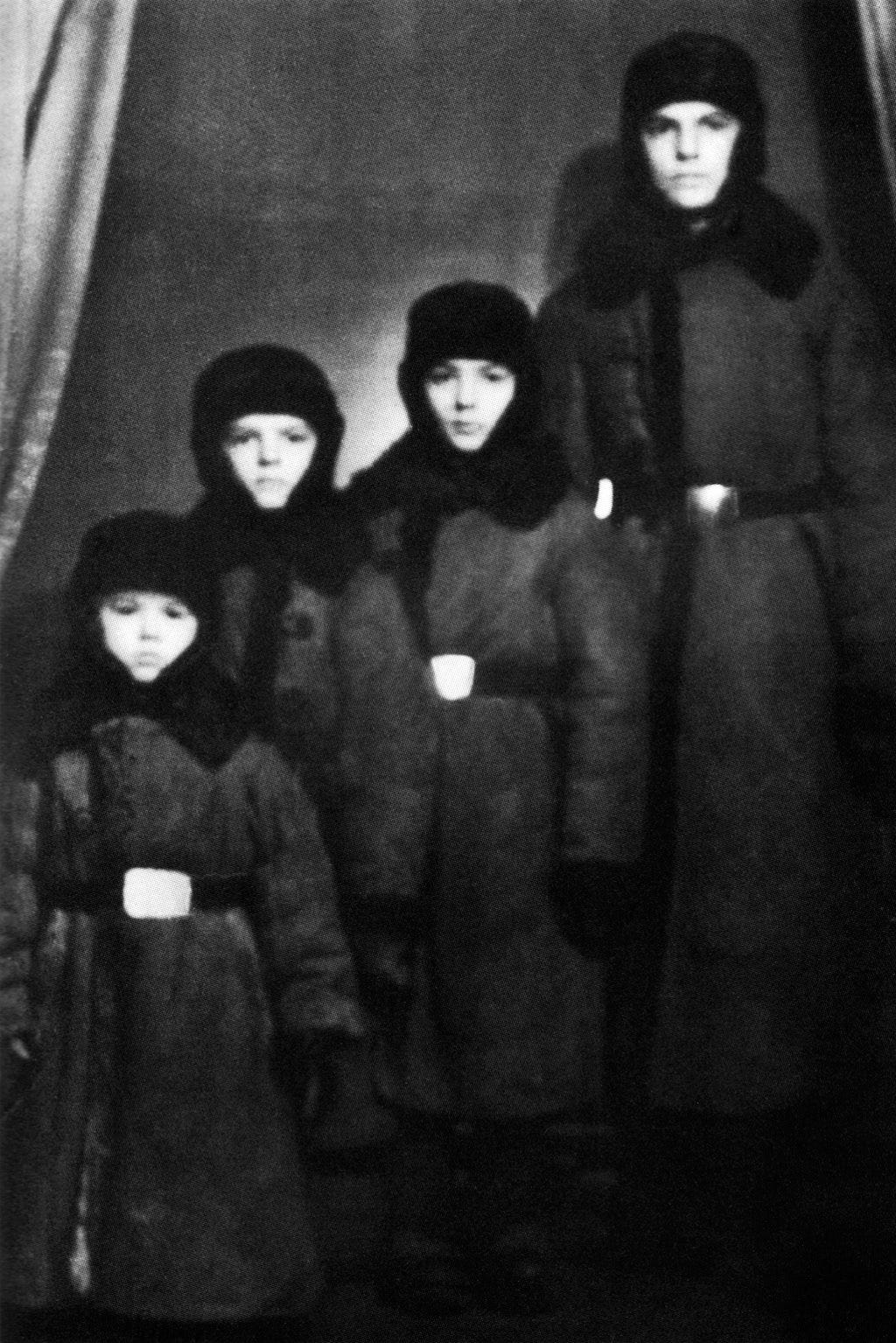
Our teacher, Sister Veronica, disentangled us and gave me a lecture which has stayed with me ever since.
How would I like to be driven from my homeland and forced to live in another country and learn to speak a strange language? How would I feel if people there called me names and wouldn’t be my friend?
As punishment I would be made to sit next to Dima like a human Guardian Angel to help him for the rest of my time at Mary Immaculate.
She then told the class we should call this new boy Jim so he would fit in.
I asked Egoroff why Jim, and he gave a typical Russian answer: “Are you hanging spaghetti on my ears? Would you have of had me called Dim?”
Sitting next to Jim worked out well because we helped each other cheat. Not to beat the other kids, mind you: just to get three out of 10 right in tests – any less and we’d get the cane; any more and they’d know we were cheating.
And the best thing about this Russian was that his English was worse – or ever worser – than mine.
Jim mixed up our sayings and so he would exclaim: “What do you think it is? A Bush Christmas?” One day, he arrived late for school explaining: “It’s raining dingoes out there, Sister.”
But his unusual English worked really well on the State School Kids who didn’t know what to make of this Russky with arms like a mud crab.
Jim would say when they shouted their insults:
“Do you want to go down in a screaming heap and come up spitting out teeth by the dozen you bastard boy?”
Jim confided to me that he was strong because “my grandmother had of had been a Cossack wrestler”.
To qualify for secondary school in Queensland in the 1950s you had to pass a public examination over three days called “State Scholarship” which was so tough that 40% of children failed.
These students then had to leave school and get a job at 14.
So the only reason Jim and I got to go to secondary school at a Great Public School (Gregory Terrace) was because the nuns at Mary Immaculate taught us so much: even putting on three-hour Saturday morning English classes analysing sentences and parsing words to prepare for Scholarship.
During the week these dedicated women also taught us elocution, to recite poetry off by heart, the piano, the Theory of Music, Arithmetic, singing, Geography, History … and even the mouth organ.
The Head Nun, Sister Vincent, did all this but still found time to coach the famous Mary Immaculate rugby league team where Jim wore a Cossack seal-skin cap as headgear.
I wouldn’t have passed Scholarship except that old Sister James (who had taught me in Prep.1 when I was four) gave me extra tuition behind her classroom alone under the Mary Immaculate Church.
When State Scholarship finally arrived the 40 of us gathered at the Convent gate to walk down to the home of our natural enemies, Junction Park State School, to do the exams. (The state didn’t trust Catholics to oversee their own pupils.)
Sister James staggered across the wide dusty playground and presented me with two talismans.
First, she gave me her own fountain pen, saying, “Hughie, no one who has ever used this pen has failed State Scholarship”.
Then Sister James pinned a Holy Medal to my shirt collar, saying: “This is the medal of St Jude, the Patron Saint of Hopeless Causes”.
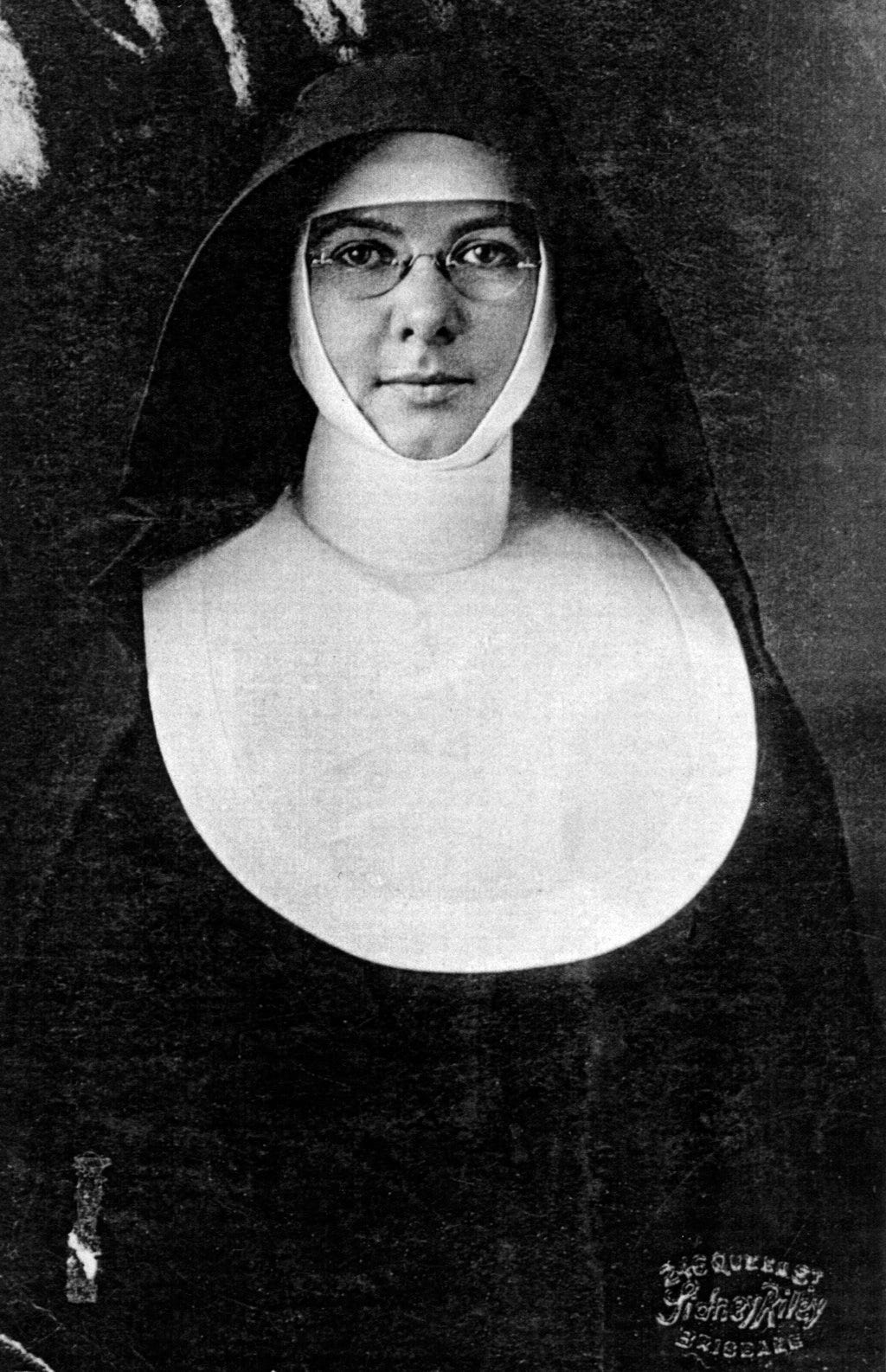
Because of Sister James I passed by one mark out of the 400 – and went to secondary school where I sat with Jim for the next four years.
Then I travelled overseas making a living writing stories in places like Red China, Singapore, Hong Kong, Indonesia, Vietnam, London, and West Papua.
In London, I found myself in charge of a desk overseeing several First Class Honours graduates from Oxford and Cambridge. That was when I first realised what a boundless education the nuns of Mary Immaculate Convent had given me.
As it happened, my memoir of Mary Immaculate Convent was so popular that I was asked to adapt my book for weekly broadcast nationally on the Australian Broadcasting Corporation (ABC) in 1991 … and then to write more Mary Immaculate stories for broadcast the following year.
In 1996 I was asked to write it as a Play with music to open the first Brisbane Festival. The Play — with its 11 actors and three musicians — then toured Queensland.
The National Trust asked me to guide 200 members through Annerley: Ekibin Creek where we canoed; the Convent classrooms and the Big Boys Playground; the Lunns for Buns cakeshop; the Blacksmith’s shop where they made the horseshoes; and the red brick church whose tower overlooked south Brisbane, .
The book was set for study in Grade 6 in Queensland and Grade 12 in New South Wales.
A bloke from Adelaide who read the memoir immediately moved to Brisbane, met the love of his life, and then named their son “Hugh”.
ABC radio announcer Spencer Howson brought a woman over to me at an outside broadcast at the Brisbane Exhibition to repeat what she had just told him, and she said, very slowly and deliberately:
“I’ve been reading Over the Top with Jim for 9 years and I’m on the last page – and I don’t want it to finish.”
A woman wrote from England to say of her Anglican Minister in the county of Kent: “Every Sunday he gives the congregation a dose of Over the Top With Jim.”
But the best thing for me – because it was so unexpected – was that kids (who could never have our experiences) liked it.
One 7-year-old wrote to thank me, saying her family had moved to Queensland “after your book made me unafraid to move here”.
At Redcliffe Library, a mother brought her 12-year-old son to see me, saying he had suffered terrible nightmares all his life and no medico had been able to help him.
“Then one night,” the mother said, “I started reading Over the Top with Jim to him in bed …” and the boy piped up:
“Your book stopped my nightmares!”
That’s the sort of magical place that is being shut down forever this year.
I've just been through the heart-wrenching experience of selling my grandparent's home in Sydney for my uncle - to fund his aged care. Bought in 1951 when North Epping was all bush and chicken farms, every inch of it held childhood memories worth more than gold. It was where my mother grew up - reading books under her blanket with a torch, to avoid getting caught past her bedtime. And wandering in the Lane Cove National Park down the road, where swaggies still passed through now and then. One of them even making her a cup of billy tea. I would have given anything to keep the property in our family. So this piece of yours is strangely comforting. Reminding me I'm not alone in mourning the loss of treasured places.
Kenny would be rolling over and over again in his Grave