

My Wife, My Editor
Out of the loop

Years ago, a polite reader emailed a question which began: “Mr Lunn, would you, or one of your staff, please answer this for me …”
Staff? Staff?
Writers don’t have staff!
Not wishing to admit to her that we writers are such small beer, I emailed back: “My small in-house editorial staff will deal with that as soon as possible.”
I wasn’t really lying.
After all, my wife, Helen, is only 4 foot 10½ inches.
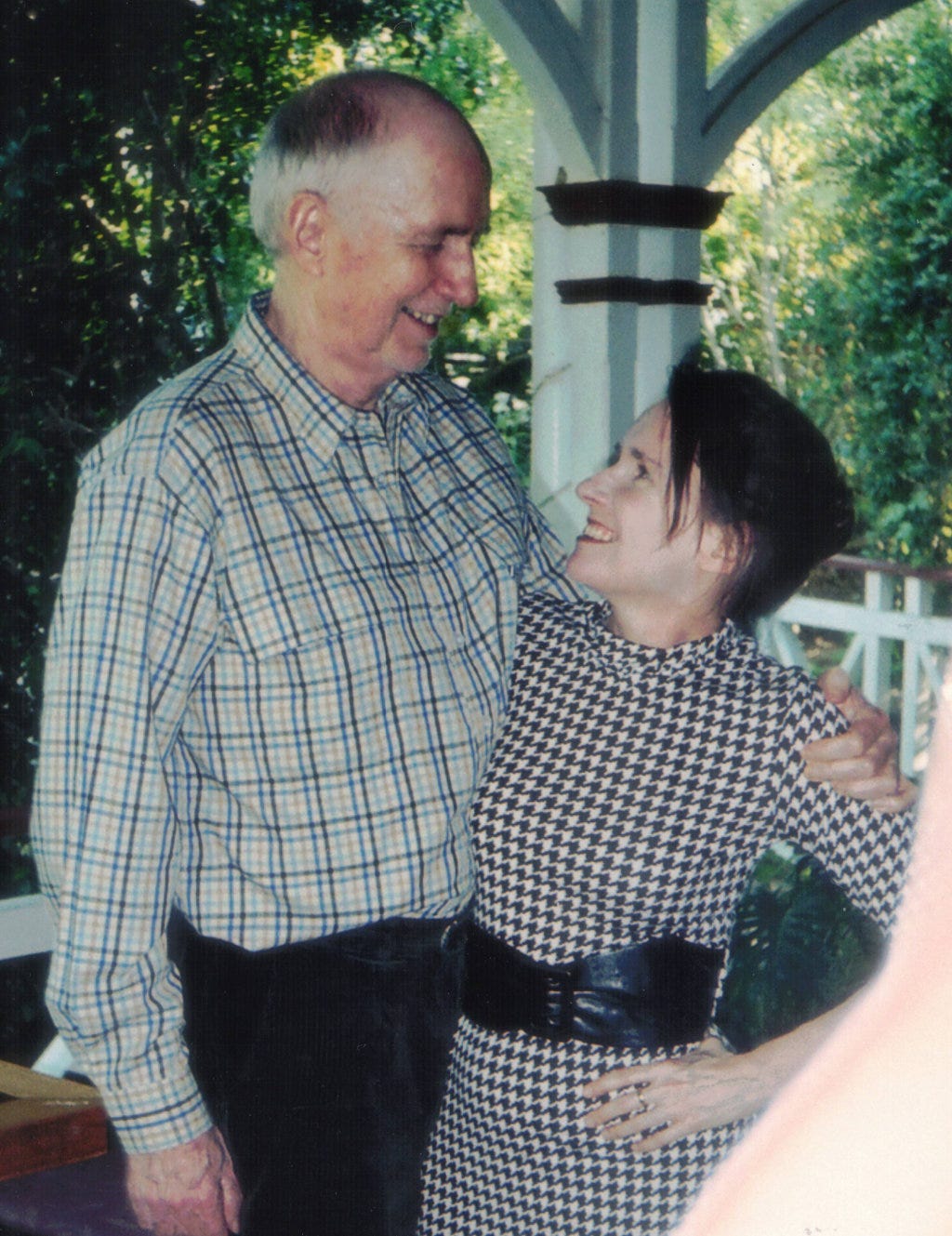
We have been married 45 years and, without Helen’s input, you wouldn’t be able to read these 100-plus-plus-plus substack stories: at your leisure, at any time.
Helen acts as a domestic technocrat: filer, secretary, researcher, pictorial editor, podcast producer, computer engineer, public relations person, storeman-and-packer of books, liaison officer, IT dilettante, co-ordinator general and, especially, editor.
She also used to answer my telephone calls.
Decades ago, I would receive a lot of annoying calls (at all hours) until I took my number out of the Brisbane phone book. (This was back when there was a phone book.)
The final provocation came at 5.43 one Sunday morning when a stranger with an American accent rang from Stradbroke Island to declare: “Hughie, you and I are going to write a great book together!”
Trouble was – after my number disappeared from view – readers started telephoning my Brisbane relatives.
Most of whom tried to be of help.
My niece (also a Helen) early one morning answered her home phone to a gentleman who had been anxiously searching for me.
The caller told my niece he wanted me to write a book “on the impact of the crocodile on the Queensland view of life”. He said he envisaged an A4-sized hardback, about 400 pages – including as many colour photos as possible – with foreword, preface, author bio, captions, cover design, back cover blurb, and footnotes.
Plus, of course, a full index.
Taking copious notes, my brilliant and enthusiastic niece eventually inquired on my behalf: “So are you planning to publish this book?”
“Not on my pension I’m not!” the gentleman replied.
Because my wife, Helen, was a reporter on The Courier-Mail in Brisbane and then a book editor before we married, all of my books, essays, radio serials, plays, and speeches (and these substack stories) are the better for her caution.
Whether they know it or not, every writer badly needs an editor.
As Helen once explained to me: “Not to correct grammar, but to try to stop the writer making a fool of themselves”.
Writing is in Helen’s DNA.
Helen’s family followed my feature stories and columns in The Australian newspaper for 17 years: her uncle was a celebrated Australian journalist for decades and his name was also Hugh.
He had risen back in the 1950s to become Press Secretary to Australia’s longest-serving Prime Minister, Sir Robert Menzies: travelling to England and the Middle East with him, and penning many of Menzies’s famous one-liners.
On Uncle Hugh’s death, Sir Robert wrote a hand-written letter to my wife’s Brisbane family describing how inconsolable he was.
Unfortunately, Helen cannot always be by my side to assist, though I could have done with her many times.
Earning a living as an author requires a lot of travel: nobody buys a book they’ve never heard about.
Yet everyone wants one after they meet the author.
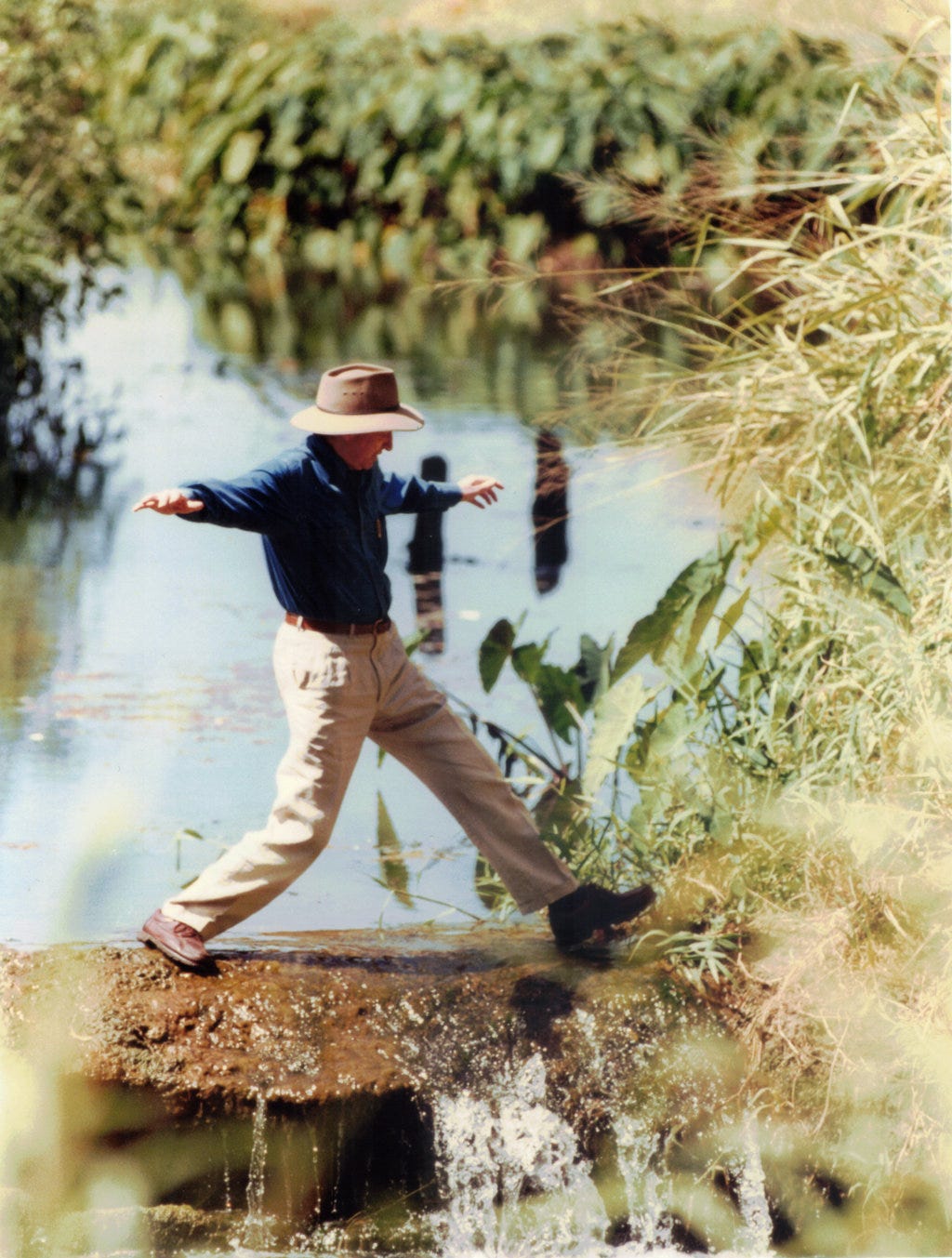
Back in the 1980s, I was invited to fly 1,000 miles south of Brisbane to speak at the famous Melbourne Spoleto Literary Festival (now the Melbourne Writers Festival) – Australia’s premier book event for authors.
I was thrilled … until I inquired how to get to the venue.
The instructions came back: “From Melbourne Airport, you catch the airline bus along the freeway into the city and then take the St Kilda tram for six stops, hop off and turn left…”
Which shows what small beer writers really are.
They didn’t even refund the tram ticket.
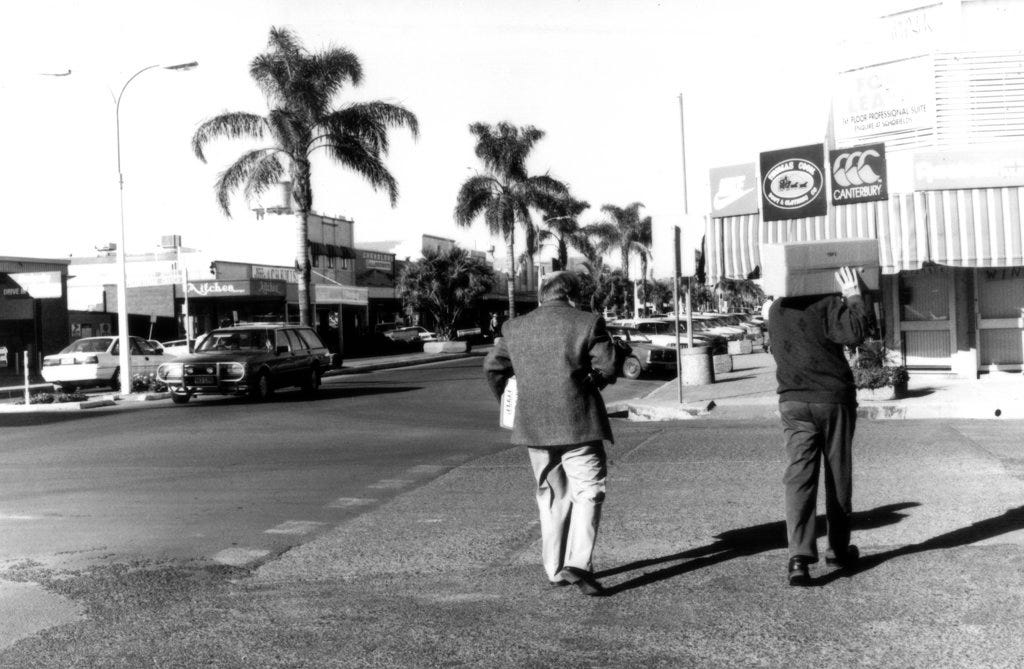
Still and all, being asked to speak at Spoleto could not be knocked back. It’s high-flying for an author (particularly one from the Deep North) to be invited, so a Melbourne radio show asked me to come into their studios to be interviewed on air.
Beauty!
Unfortunately, the show was scheduled for after midnight when almost nobody would be listening: but the number one rule of being a writer is “never knock back a gig”.
At least the radio station provided a taxi voucher.
The taxi dropped me off and – after it sped away – I found myself totally alone in an unfamiliar city after midnight on an interminably long, dark, street lined on both sides with old brick four-storey factory walls all joined together … with no obvious entries anywhere.
And there wasn’t a human around to ask; or even a Victorian.
Helen would have known what to do, but she was tucked up safely in bed back in our Indooroopilly home … while I was in danger of being mugged.
Eventually, by feeling with my hands along the shadowy previous-century walls, I found a small black locked door. I began knocking on it: loudly enough to be heard inside, but hopefully not loudly enough to attract the infamous Melbourne Underbelly.
In any case, no one responded.
Finally, in a panic my fingers stumbled upon a tiny buzzer embedded in a brick next to a sign written on cardboard in black ink … and I was rescued by the wireless program’s producer.
Trying to knock off two gigs with one stone, I then headed 500 miles west to genteel Adelaide which is so isolated – below thousands of square miles of desert – that it’s almost off the map, if you’re a Queenslander.
But the City of Churches had been kind enough to ask me – while I was in the neighbourhood – to speak at a gala Literary Luncheon in the city’s biggest international hotel.
On arrival, I found that the organisers had arranged for me to appear on In Adelaide Today, a local morning TV show with a large audience at 11 a.m.
I was even provided with a return taxi to the distant TV studios.
The woman interviewer was heavily made-up and gushing with enthusiasm as I took my seat in front of the sunlight-bright lights. “And Hugh! I believe you are the STAR speaker at a HUGE gala literary lunch in our wonderful city of Adelaide! Today! Congratulations to YOU!”
“Well,” I said, “it’s not that huge. Only 57 people have booked.”
(If Helen had been there she would have stopped me saying that. One of her many maxims is: “Don’t take a shingle off another man’s roof.”)
The interviewer appeared to deflate.
She looked around for her producer, searching for some answer, and finally blurted out: “Well Hugh! I’m absolutely certain that all of the guests at your fab-u-lous Literary Lunch today in Adelaide are going to have the MOST WONderful experience!”
I’d forgotten that television is really a selling medium.
I arrived back in the taxi at the international hotel pleased with the state-wide exposure I had achieved for our lunch … but the organisers were, strangely enough, now not excited at all.
“What did you say on TV this morning Mr Lunn?” one snapped.
I told her.
“Well,” she exhaled, “we’ve since been inundated with calls from people who suddenly want to come to our lunch which has been advertised for a whole month!”
“That’s good,” I said: pleased that, for once, telling the truth had worked on Australian TV.
“No, it’s not good at all!” she retorted. “The hotel has ordered only 29 chicken breasts and 28 steaks – so we can’t take even one of them … all you’ve left us with is 100 let-down customers!”
If only the publisher had stretched their budget to pay for Helen to come with me, this would never have happened.
But there’s just not enough money in books to pay for staff.
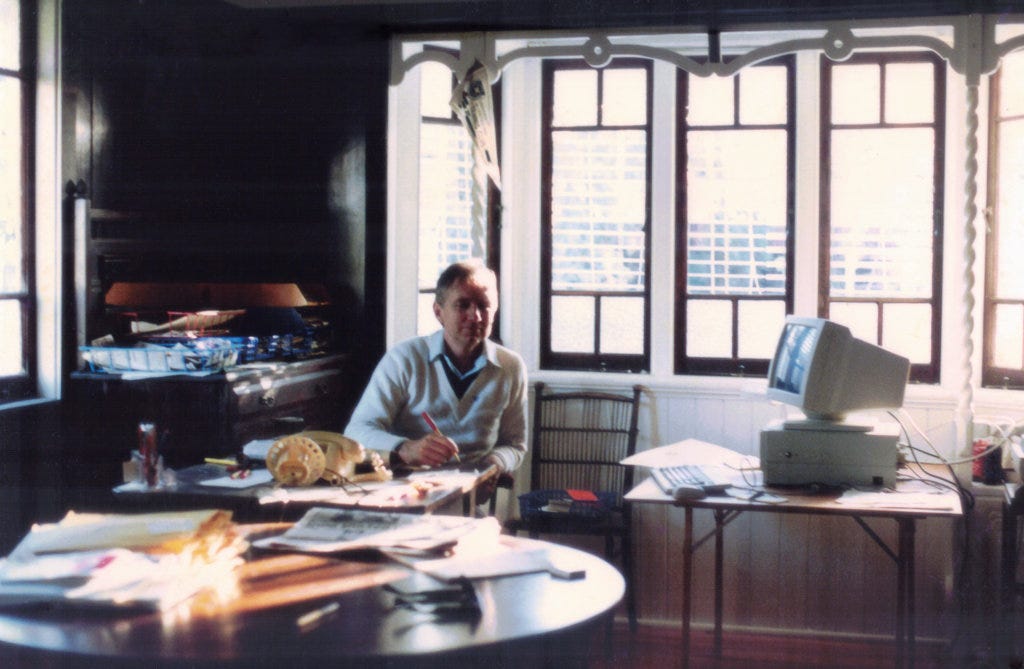
In fact, a publishing sales manager once confided seriously to me: “Y’know, I’ve worked out all the percentages, and book publishing would be a profitable business … if only we didn’t have to pay the authors!”
Suddenly he realised who he was talking to and quickly added, with a cheerful grin: “I shouldn’t be telling you that, should I?”
It was OK.
What he said was completely accurate.
Writers are at the bottom of the feeding chain. And now that A.I. is churning out books by the thousands, that publishing sales manager is finally going to get his wish: No authors to pay!
(Just astronomical electricity bills at Data Centres around the world.)
Which is why most writers soon twig what’s going on and climb relentlessly up the ladder, any ladder, where the pay is more certain.
This was brought home to me when an old journo friend returned from several years overseas and put on a party. She was looking to base herself once again in Brisbane, so all her ex-colleagues and friends were there.
We reminisced for hours … but it was only when I was leaving that she buttonholed me with the big question: “I’m looking for a position back here. Do you know anyone who could help? Any leads?”
I was (and still am) out of the loop.
Not in The Thick Of It, so to speak.
So I shrugged: “Well, one thing is for sure, the major political parties are always looking for staff…”
“STAFF!!!!!” came her yelped response.
“I don’t want to be STAFF!”
What's that expression?
"Behind every good man is a good woman"
Perhaps Helen should write a book, "Living with Hugh". Would be well received. Cheers
Hugh, you have written a beautiful tribute to your wife of 45 years Helen. I have been fortunate to see over these many years your love, care, compassion, admiration, and support for each other. You are a great combo. Love the photo of Hugh and Helen. Keep the stories coming